
Egyptian women and the revolution
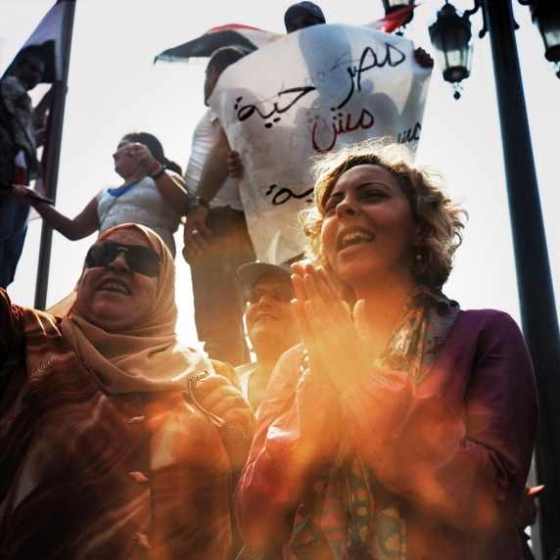 Photo by Rena Effendi
I have a piece in Newsweek magazine about Egyptian women and the revolution. I started working on this in March. Perhaps because I was focusing on the topic, I've been particularly aware of women's absence from the post-Mubarak decision-making process.
The morning of January 28 I was sitting in a room of activists, and quite a few of them were women. There were women in the street that day, and there were a lot of women in Tahrir. But women have been largely missing, not just from the two most influential organizations of the post-Mubarak era -- the army and the Muslim Brotherhood -- but from opinion columns and the podiums of press conferences, from the courtrooms and of course from all the positions that have yet to open to them, such as being governors or university deans or heads of state institutions. We have one female minister, Fayza Abul Naga, and she is a Mubarak hold-over. (The one area where women are quite influential is the media, with female TV talk show presenters becoming quite well-known public personalities).
Discussing women's rights in the Arab world is always complicated -- there are so many condescending clichés to avoid. Right now, women are just one group of people in Egypt -- alongside the young, religious minorities, the working poor -- who have yet to see any change. There is a question as to whether it makes sense to focus on women's rights rather than on political/socio-economic rights for all. Then again, women's demands always get shunted to the side with this argument ("It's not the right time"); and I suspect that a change in gender attitudes is part of a larger, necessary change in power dynamics that is key to democratization. What's remarkable (and a remarkable difficulty for Egyptian feminists) is that the very fact that women face discrimination and need to fight for greater rights is so virulently denied or so widely dismissed -- including by many women themselves.