
Fighting again in Tahrir
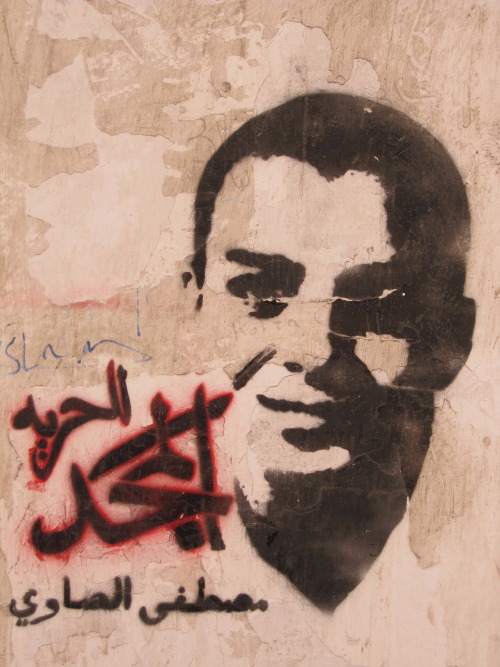 A stencil of the martyr Mustafa Al Sawy. The 25-year-old lab technician was shot in the chest by police on Kasr El Nil bridge on January 28
Violent clashes between protesters (including families of martyrs) and the police broke last night in and around Tahrir Square and have continued into this morning, leaving hundreds injured.
The spark appears to have been a memorial service for the families of martyr's at the Baloon Theatre in Agouza. People disrupted the ceremony (either the relatives of other martyrs, or people posing as them); a group marched to Tahrir, where they were met by riot police, tear gas and rubber bullets. Word spread, and activists and others joined the clashes with the police.
This violence is the inevitable result of the lack of transparency and of momentum in the judicial proceedings against former regime figures and especially the police (something we talked about on the last Arabist podcast). The families of martyrs' were shut out of the last session of the Habib Al Adly (the former Minister of Interior) trial; they went wild when the trial was postponed again. Everyday I read and hear stories about police officers who are on trial (or should be) going back to work at their old posts; and about families being bribed or threatened ("We'll arrest your other son on drug charges") if they don't drop their cases.
Now both Mubarak and Adli are scheduled to next appear in court on the second day of Ramadan. We all know that means a month-long postponement. And while justice drags out, the Ministry of Interior is in complete denial about the extent of its culture of abuse and the need for total reform. The police literally seem to hope that by sulking at home (and thereby showing people how necessary they are); and by making a lot of vague promises and handing out glossy brochures, they can teach people to appreciate them and rehabilitate their "image." But what they really want is their power back; they can't conceive of doing their job in any other way than with total impunity. They view the idea of accountability as undermining their prestige and authority. There is no sense of the moral authority that would come, eventually, from publicly cleaning house.
I can't imagine the suffering of young men disabled for life or of families who have lost their children. I can't imagine being angry or brave or idealistic enough to be ready to die for an idea of justice, a vision of change. Every loss of human life and health is a tragedy, but we owe these losses--losses paid as the price for a great victory, a great hope--special respect. The uprising started because people were tired of being brutalized and humiliated. For me, justice for the martyrs, the injured and their families is the test of whether something has really changed.
Which is why it is so important that some policemen at least be judged, publicly, for what they've done. The families of the dead and injured and the activist community (who in many cases come from quite different backgrounds) have come fully together in calling for justice. I don't think Egyptians are going to be satisfied with anything less.