
Where is Cairo headed?
The shape that Cairo is taking--physically and in people's imaginations--is something that has interested me for a long time. I've long been fascinated with the two extremes that seem to represent the future of the capital: the عشوائيات, the so called "informal" neighborhoods where as man as two-thirds of all Cairenes live; and the new private gated cities in the desert, whose recent, staggering spread is altering the dimensions and relations of the city.
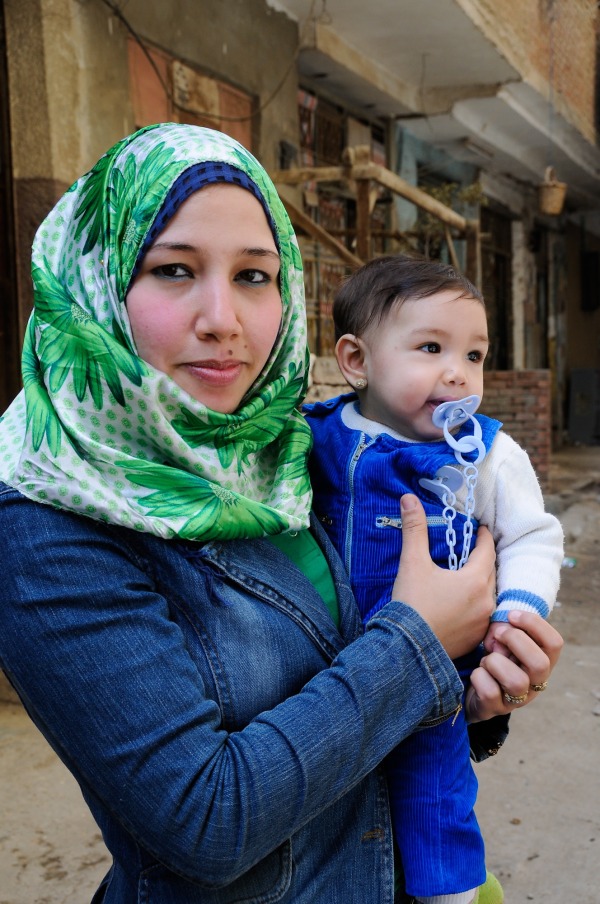 Hoda, 26, Imbaba resident. Photo by Dana Smillie.
I've just published a piece in The Review at the National that includes a lot of my thoughts on the topic. Here's part of the introduction:
Most capitals are magnets, but the speed with which the Egyptian one has grown in the last century is testament both to a remarkable centripetal power and to a surrounding vacuum of opportunity. Swelled by waves of rural migration, the population of greater Cairo has gone from less than one million at the beginning of the 20th century to about 18 million today – a megacity on the order of Mumbai or São Paulo, with more people than Lebanon, Jordan and Libya combined.
For centuries, Cairo’s expansion has been checked by geography: the city is bounded by a narrow strip of fertile, Nile-irrigated land, with nothing but desert beyond. The migrants who flocked to the city in the last century found there was nowhere to live: they built shacks on rooftops; they made homes out of covered alleys, inner courtyards, and stairwells. Priced out the soaring formal real estate market, they started building illegally--on the precious agricultural land that surrounds the city, and on the barren plateau that separates it from the desert.
Cairo has long been on the verge of a nervous breakdown. The city teeters under the weight of its multitudes – its public services worn ragged; its air pollution some of the worst in the world; its traffic barely managed by freeway overpasses and tunnels, clumsy last-minute bypass surgeries intended to repair the city’s clogged and failing arteries.
Faced with the city’s barely contained chaos and alarmed by the growing slums, Cairo’s elites have begun to dream of escape. Along the Ring Road, billboards advertise exclusive new private developments, with names like country clubs or bad discos – Utopia, Le Reve, Dreamland, Qattamiya Heights, Palm Hills, Belle Ville – and slogans like “The Egypt of My Desires”. One advertisement, overlooking dilapidated buildings in the centre of town, simply asks: “Why Are You Here?”
The piece goes on to look at, among other things, the--generally negative and very stereotypical--ways in which Cairo's "slums" are portrayed and discussed.
I couldn't quote from all the books that informed the piece, but I thought I'd take this opportunity to list some recommended Reading on Cairo:
1. Cairo Cosmopolitan. Ed. Diane Singerman and Paul Amar (AUC Press, 2006), and Cairo Contested, Ed. Diane Singerman (AUC Press, 2009). Collections of scholarly articles, many of them insightful and informative.
2. Maria Golia's Cairo: City of Sand (AUC Press, 2004). Loving and idiosyncratic essays about the city, full of wonderful details.
3. Mike Davis' Planet of Slums (Verso, 2007). Puts the development of Cairo's informal neighborhoods into terrifying global context.
4. Dina Heshmat's scholarly work Cairo in Contemporary Egyptian Literature (available in Arabic and French only).
5. Le Caire by André Raymond; 1001 Years of the City Victorious, by Janet Abu-Lughoud; and the extremely readable Cairo, the City Victorious, by Max Rodenbeck. Great books for getting to know the city and its history.