Photo of the day
Issandr El Amrani |
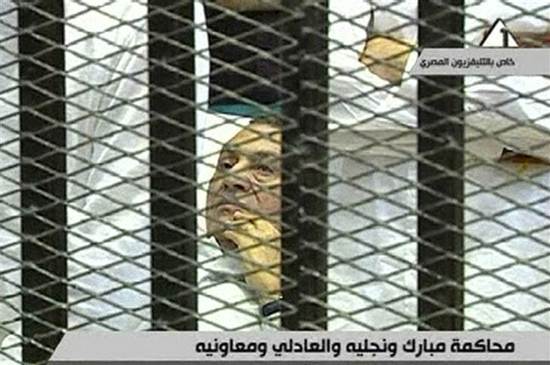
mubarak I have to admit I was skeptical we'd see these images of Mubarak in court.
- Hosni Mubarak trial: as it happened - Telegraph
- Mubarak Pleads Not Guilty at Trial - WSJ.com
- Ailing Mubarak wheeled into courtroom cage for trial - CNN.com
I agree with this take:
The moment Mubarak received his legal summons yesterday, officially accusing him of said crimes, the most important nail in the coffin of Middle-Eastern cult-of-personality and leader-worship was finally hammered, and would only be hammered further by the live telecast of the trial. Leaders are human beings, just like the rest of us, and the same laws that apply to us apply to them as well. If they do break them, they will suffer like any of us would. And just because of that, almost regardless of how the trials proceed, many of us here feel more even empowered and more dignified as citizens than as we did even on February 11th as well. And it's a watershed moment for an entire region struggling with corrupt, bloodthirsty and oppressive regimes, many of which are starting to believe they managed their way out of the Arab Spring. As the leading figures of those regimes received the news that Mubarak, one of the most powerful, oldest reigning, and once untouchable among them, was officially served his legal summons, all those men knew that the end of life as they were used to it has finally come, forever. Governments are for the people, not the other way around; and the people owntheir countries, not the regimes.
A great day.


Reader Comments (5)
Amen - schadenfreude never felt so good. What about Habib al-Adly shaking hands all around and being basha-ed and deferred to, though? That was creepy.
But with Mubarak gone how will the Zionists keep torturing and killing Egyptians. If Gaddafi is overthrown how will Zionists torture and kill Libyans? Bashar Al Assad?
Yeah! For all the scoffing about what the Arab Spring has not yet achieved, dramatic scenes like today's ram home that it has completely changed perceptions of power, and thus the calculations made by political actors. Regimes can longer take peoples for granted, and people no longer need resign themselves to living with nasty regimes.
One slightly different issue -- I had the sense from Twitter that a lot of the people watching the proceedings on TV had never actually seen an Egyptian trial before. They're not really designed to be easily accessible to the public, as a lot of the courtroom back-and-forth depends on a knowledge of the prosecution's dossier and other documents which aren't read into the record. This is my understanding, anyway -- someone with a legal background may correct me. The consequence is that it's going to be difficult for audiences to assess whether or not the evidence is sufficient to convict, whether Mubarak and the others genuinely received a fair trial.
Bravo Egypt. Although Tunisia gets originator credit, I'm sure history will remember more the contribution Egypt made toward beginning a new world order. Which I suspect will go down in history as significant as the Reformation of the early 1500's.
I loved the "Governments are for the people, not the other way around; and the people own their countries, not the regimes." This should be coined as the motto for the new world order.
Long live freedom of the individual!
Let's hope Egypt elects another Saladin, not Mubarak