
Londonstani on "The Islamist"
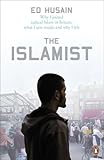 Londonstani, a former Cairo drinking buddy and journalist who blogs over at our counter-insurgency obsessed friends Abu Muqawama (they who speak of themselves in the third person - just teasing, guys), has a great review of Ed Husain's The Islamist, a book about the radicalization of British Muslims. Londonstani makes a very good point about its superficial treatment of "traditional Islam" vs. modern Islamism (whether radical or not) and the importance of understanding the rigid traditionalist socio-cultural concepts that are perpetuated among migrant communities (sometimes even when these things evolve in the "home country"):
"This ‘traditional’ outlook is in general terms shared by most (if not all) immigrant Muslim communities. Husain comes from a Bengali family background, but the cultural outlook he describes is shared by Pakistanis, Arabs, Turks, Kurds, Somalis and Nigerians. That’s not to say all these cultures are exactly the same, but in the main they exhibit large measures of racism (often against each other), sexism, tribalism and a quietist approach to dealing with the outside world that fail to meet the challenges their children experience in reconciling their backgrounds with their everyday lives.
In a depressingly high frequency of cases, these ‘traditional’ outlooks result in harmful and exploitative practices. Two years ago, I got to know several young men from Bengali backgrounds who lived in housing estates in Husain’s old stomping ground. One of the guys, Fasial, I knew from the local gym. He was bearded and religious, and an upstanding member of his community. Three times a week he helped organise a bus that took elderly residents of his housing estate to their local church. And could be found most afternoons teaching football to pre-teens in the estate’s playground.
After knowing Fasial for about six weeks, he started telling me how he had been a gang member until a visit to Bangladesh, where he found religion. A couple of weeks after that initial conversation, he told me how he had ended up in Bangladesh against his will because his father wanted him to marry his cousin. At his extended family’s village, Faisal had been poisoned by relatives angry that his intended bride had chosen him instead of another cousin who lived in the village. Faisal was sick for weeks and thought he might die. He found religion on what he thought would be his deathbed. When he got better, his newly acquired religious persona allowed him the gravitas to resist community pressure and reject his father’s plans.
The other friends I had made had equally horrific stories. And some were plain surreal involving severe beatings as part of what can only be described as a voodoo ritual to banish the evil eye.
Islamism addresses the questionable ‘traditional’ practices of the families its raw recruits come from. This is a large part of its appeal. If you find yourself in a lecture hall where young Muslims are told the way of life they struggled to follow is actually itself ‘un-Islamic’, you will be able to hear the collective intake of air and the surprised mumblings of the crowd."
Go read the rest. Abu Muqawama recently became an official blog of the Center for a New American Security (the old security sucked should be their motto) and their comment counts have been going through the roof lately.